
A guide for parents · ages 0–7
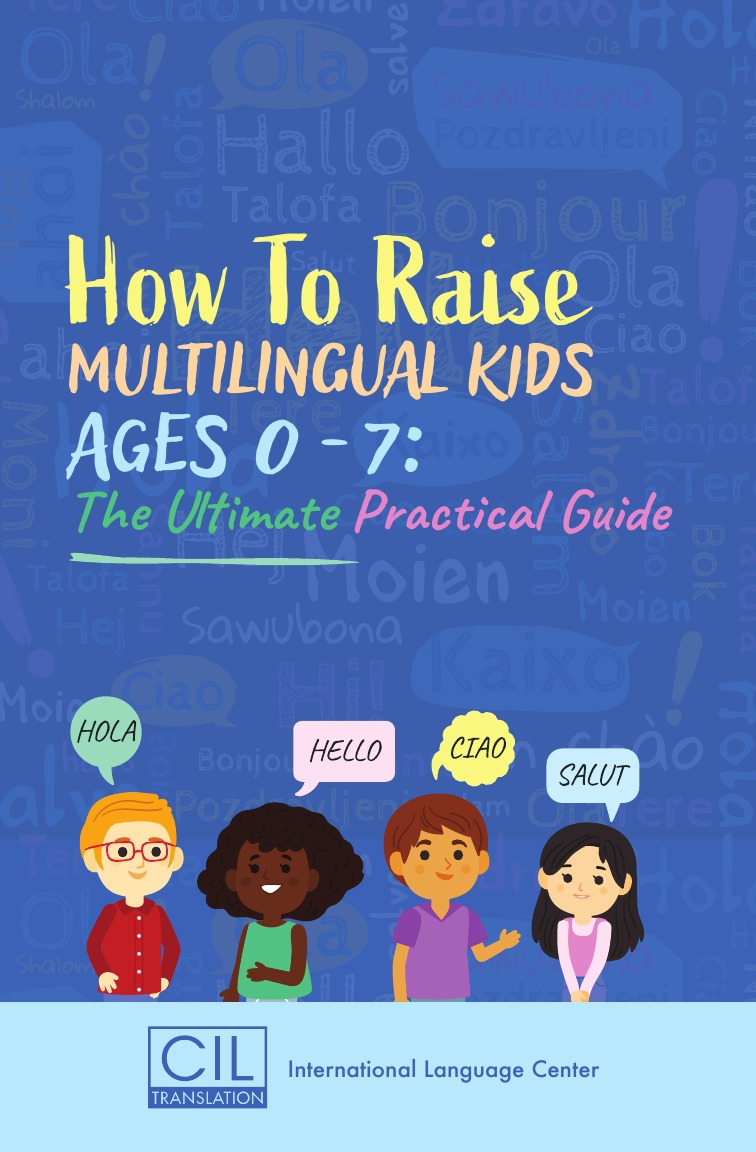
How to Raise
Multilingual Kids
Ages 0–7: The Ultimate Practical Guide
Games, stories, songs and ideas to fit your everyday family life, whether you speak one language or several.
Languages in everyday life
What if it started with a moment together?
A bedtime story.
A song in the car.
A game that gets you talking.
Would you like to pass on a family language, introduce your child to a new one or keep several languages alive at home? This guide helps you explore different approaches and choose what fits your family’s life.
Read it from beginning to end or return to a chapter when you need it. You will find activities to try, summaries to revisit and space to write down your own ideas.
A taste of the guide
Ideas that come to life at home.
Open an idea and think about how to adapt it to your child’s age and interests.
Play
Make room for languages in the games your child already enjoys.
Explore an idea
Turn a corner of your home into a pretend restaurant. Take turns being the customer and the server, using a few words or phrases in your chosen language: saying hello, ordering and saying thank you.
Based on chapter 3 · Role-playing
Read
Share a story and let the conversation carry on beyond the page.
Explore an idea
Choose a picture book that suits your child. Look at the illustrations together, name what catches their attention and talk about the characters. The guide also explores bilingual books and stories to listen to.
Based on chapter 4 · Books and stories
Sing
Bring a language into the small rituals of family life.
Explore an idea
Choose a song for a familiar moment: getting dressed, tidying up or getting ready for bed. Return to it regularly, adding gestures if you enjoy them, and share the words as part of your day.
Based on chapter 5 · The magic of songs
Explore all 13 chapters
- Promoting a Multilingual Environment and Expanding Your Network
- The Power of Games
- Children and Role-Playing
- Exploration Through Books and Stories
- The Magic of Songs
- Active Learning: Sports and Language Development
- Arts and Crafts: A Magical Path to Language Learning
- The Role of Screens in Language Learning
- Traditional Online and In-Person Courses
- Artificial Intelligence (AI) Empowering Multilingualism
- Childcare Options for Language Practice
- Family Travel Adventures: Explore, Discover, Speak
- Managing Challenges and Overcoming Obstacles
Open the guide
A few pages,
to see for yourself.
Explore three pages from the English edition: activities to try, a chapter summary and space to reflect on what might work for your family.
Role-playing · page 48
Choose my edition →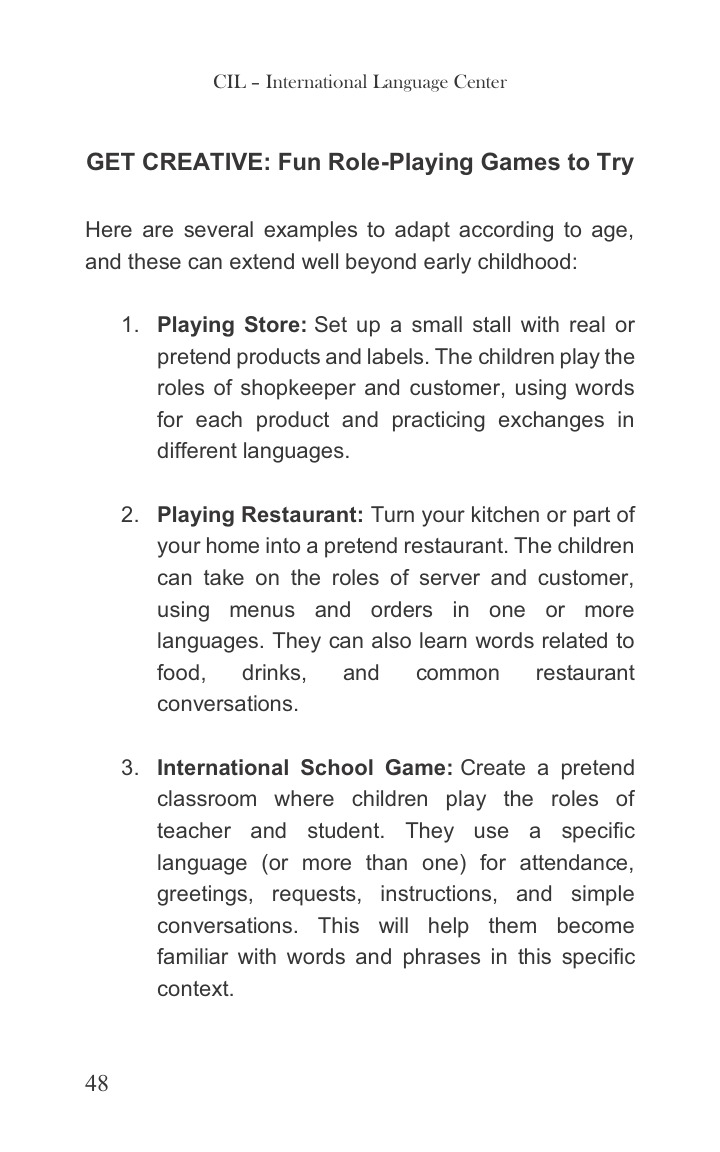
Click the page to view a larger image.
Read the sample text
Here are several examples to adapt according to age, and these can extend well beyond early childhood:
1. Playing Store: Set up a small stall with real or pretend products and labels. The children play the roles of shopkeeper and customer, using words for each product and practicing exchanges in different languages.
2. Playing Restaurant: Turn your kitchen or part of your home into a pretend restaurant. The children can take on the roles of server and customer, using menus and orders in one or more languages. They can also learn words related to food, drinks, and common restaurant conversations.
3. International School Game: Create a pretend classroom where children play the roles of teacher and student. They use a specific language (or more than one) for attendance, greetings, requests, instructions, and simple conversations. This will help them become familiar with words and phrases in this specific context.
Click the page to view a larger image.
Read the sample text
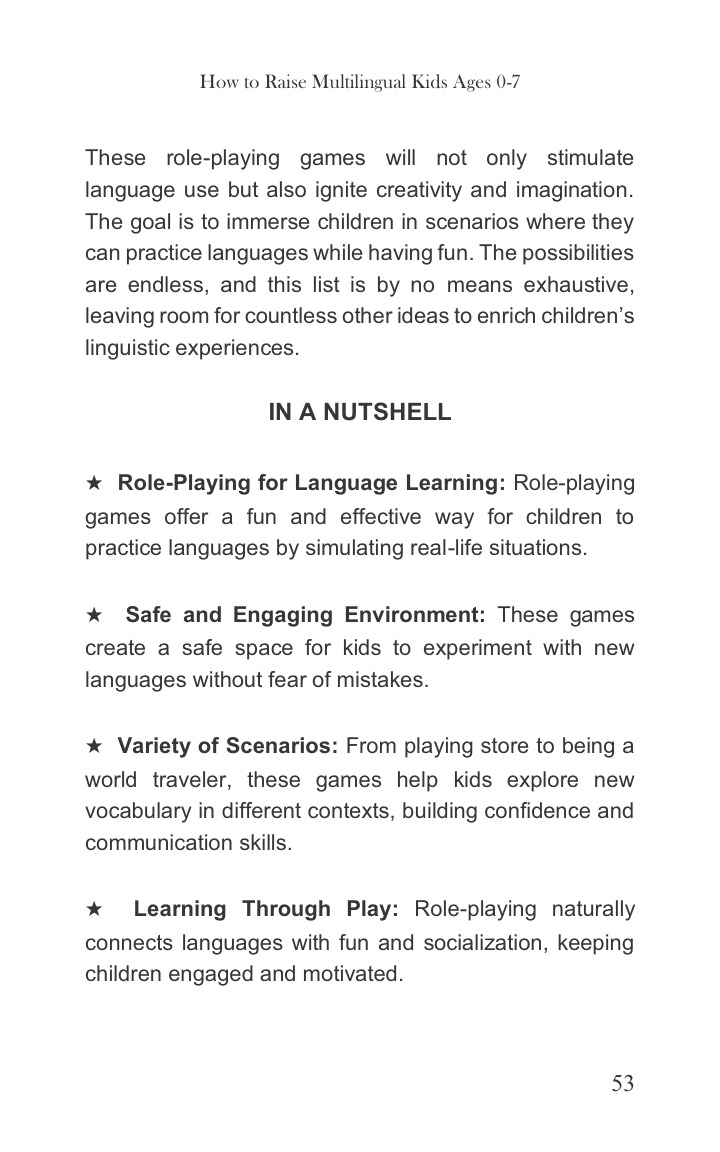
These role-playing games will not only stimulate language use but also ignite creativity and imagination. The goal is to immerse children in scenarios where they can practice languages while having fun. The possibilities are endless, and this list is by no means exhaustive, leaving room for countless other ideas to enrich children’s linguistic experiences.
In a nutshellRole-Playing for Language Learning: Role-playing games offer a fun and effective way for children to practice languages by simulating real-life situations.
Safe and Engaging Environment: These games create a safe space for kids to experiment with new languages without fear of mistakes.
Variety of Scenarios: From playing store to being a world traveler, these games help kids explore new vocabulary in different contexts, building confidence and communication skills.
Learning Through Play: Role-playing naturally connects languages with fun and socialization, keeping children engaged and motivated.
Click the page to view a larger image.
Read the sample text
What role-playing activity would your child enjoy the most? Can you imagine playing it in other languages? Are there any role-playing games or scenarios you’d like to try, perhaps in a different language? Capture your ideas and reflections here.
A guide to keep close by
Choose your reading language.
Two separate editions, so you can read in the language that suits you or give the guide to someone close to you.
How to Raise Multilingual Kids Ages 0–7
The Ultimate Practical Guide
Paperback
ISBN 978-2-9594624-1-2
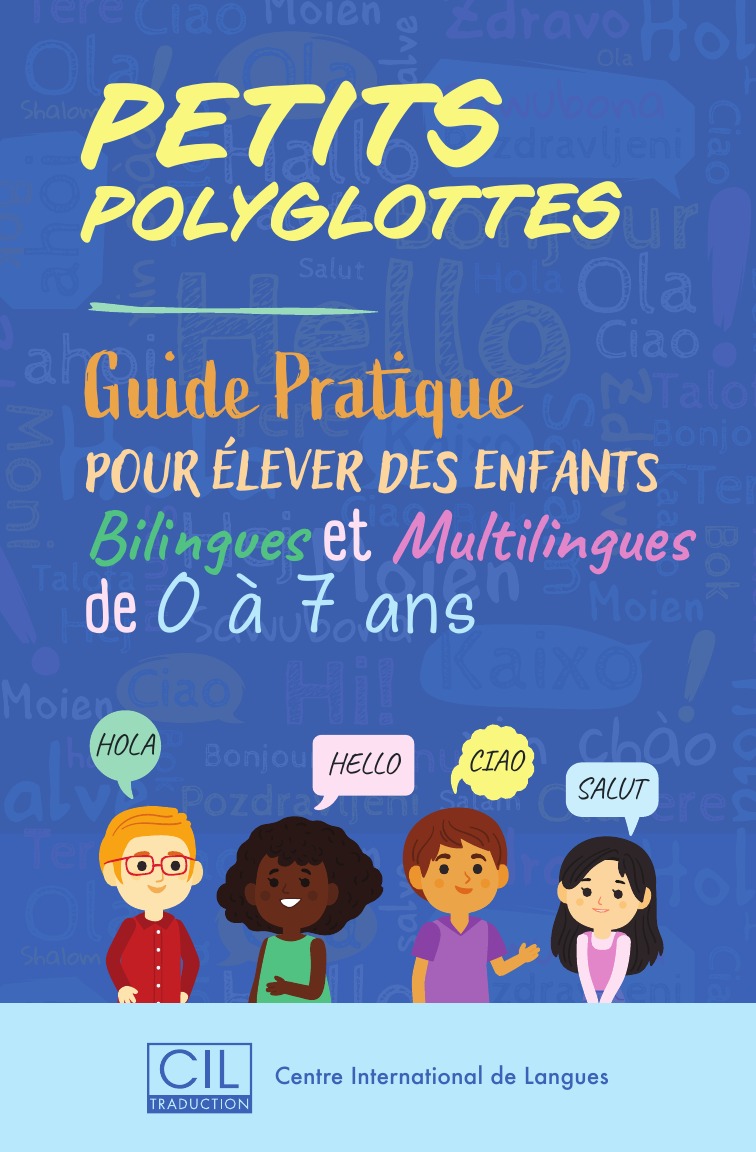
Petits Polyglottes
Guide pratique pour élever des enfants bilingues et multilingues de 0 à 7 ans
Paperback
ISBN 978-2-9594624-0-5
Purchases are made on Amazon. Check the selected store for the price, availability and delivery options for your address.
Before you choose
A few questions,
simply answered.
Who is this book for?
Parents and caregivers who would like to make several languages part of life with a child aged 0–7. It is a guide for adults, with approaches to adapt to your family and your child’s age.
What if I only speak one language?
The guide also considers this starting point. It explores how books, songs, your community and people around you can create opportunities to hear and use other languages.
Does it teach one particular language?
The guide presents approaches you can adapt to the languages you want to share with your child. It offers ideas for everyday practice rather than vocabulary lessons in one specific language.
Are both languages in one book?
There are two separate editions: How to Raise Multilingual Kids Ages 0–7 in English and Petits Polyglottes in French. Choose the edition in your preferred reading language.
Can I order from my country?
Select an Amazon store, then enter your delivery address on Amazon to see the available options. This also applies to the Caribbean and other destinations. If you have a question about which edition to choose, you are welcome to contact us.
A question about the book?
Wondering about the content or which edition to choose? Contact CIL on WhatsApp or through our contact form, mentioning the book’s title.